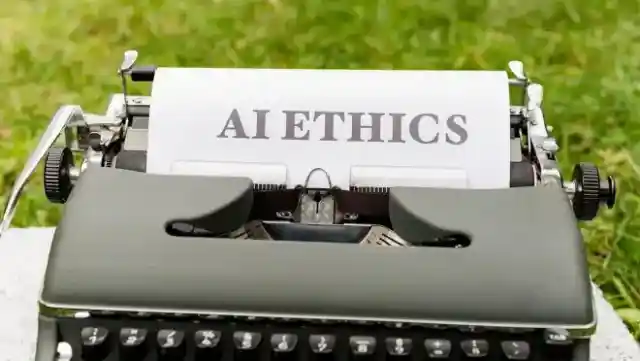
Congress and the White House both moved on AI regulation June 4, with a bipartisan audit bill and an executive order for voluntary model reviews marking a policy shift.
On June 4, a Republican and a Democrat in the House introduced a draft bill that would require major artificial intelligence companies to undergo mandatory audits and provide protections for workers displaced by automation. Hours earlier, President Trump had signed his second executive order on AI -- his first came in December 2025 -- this time asking companies to voluntarily submit their most powerful models for a 30-day period of government review. According to the Christian Science Monitor, the back-to-back moves signal the end of Washington's largely hands-off posture toward the technology.
For years, AI companies built increasingly capable systems under minimal federal scrutiny. The Trump administration's position was explicit: lighter regulation kept American firms competitive with China. That logic has not disappeared, but it no longer goes unchallenged.
The voluntary framing
Trump's June 4 order stopped short of mandating anything. Companies would submit models on their own initiative, and the review window would run 30 days -- enough time for government officials to assess capabilities, but without enforcement teeth. The Christian Science Monitor noted the contrast with the earlier December order, which focused mainly on removing barriers to AI deployment rather than imposing new checkpoints. Voluntary framing has political logic: it lets the White House claim progress without triggering industry resistance.
OpenAI CEO Sam Altman moved quickly to shape what oversight might look like. In the days following the executive order, Altman released a detailed blueprint for AI regulation -- a company proposing its own guardrails before legislators impose them. The pattern is familiar. Industry-authored frameworks tend to set the floor for what Congress eventually codifies, or they create a competing standard that stalls legislation entirely.
Trump also floated something more unusual: meeting with AI company executives to explore giving the U.S. government equity stakes in major AI firms. The idea is undeveloped, but equity stakes would give Washington a financial interest in company performance and, potentially, influence over strategic decisions. No precedent for such an arrangement exists in the U.S. tech sector.
Competing frameworks
The Christian Science Monitor described the Obernolte-Trahan bill as part of a broader wave of competing visions emerging from the White House, Capitol Hill, and industry simultaneously. Republican Rep. Jay Obernolte of California and Democratic Rep. Lori Trahan of Massachusetts built their draft around accountability mechanisms: mandatory audits and new protections for displaced workers. Bipartisan sponsorship matters -- it signals that federal AI oversight is no longer a partisan third rail, at least in the House.
Parallel regulation tracks create a classic first-mover problem. If Congress passes a bill before the White House finalizes its approach, or if Altman's framework hardens into industry practice before either, the result could be a patchwork harder to rationalize than starting from scratch. That is precisely how telecom and financial regulation developed, and neither is remembered for its coherence.
What the 30-day artificial intelligence review would actually measure is also unclear. Evaluating a model's known capabilities in a defined window is tractable; assessing risks from systems that behave unpredictably under novel conditions is harder. Independent researchers have long argued that meaningful oversight requires standardized benchmarks and third-party evaluation infrastructure -- neither of which exists at scale today.
The real fight ahead is not whether to regulate AI. It is who controls the definitions: what counts as a major company, what an audit must cover, what worker protections apply and to whom. Those details, buried in agency rulemaking and bill markup sessions, will matter far more than any executive order signing ceremony.
Frequently asked questions
What would the Obernolte-Trahan AI bill do?
The draft bill, introduced June 4 by Reps. Jay Obernolte (R-CA) and Lori Trahan (D-MA), would require major AI companies to undergo mandatory audits and establish protections for workers displaced by AI-driven automation. Full bill text had not been released as of publication.
What does Trump's June 4 AI executive order require?
The order asks major AI companies to voluntarily submit their most advanced models for a 30-day period of government review. Participation is not mandatory and no enforcement mechanism is attached.
What did Sam Altman propose for AI regulation?
Following Trump's order, OpenAI CEO Sam Altman released a detailed framework outlining how artificial intelligence should be regulated, positioning OpenAI as a willing participant in shaping oversight rather than a subject of it.
Does the U.S. have federal AI regulations yet?
No comprehensive federal AI law exists as of June 2026. Policy has relied on executive orders and voluntary industry commitments. The Obernolte-Trahan bill is Congress's most concrete attempt yet to establish a statutory framework.