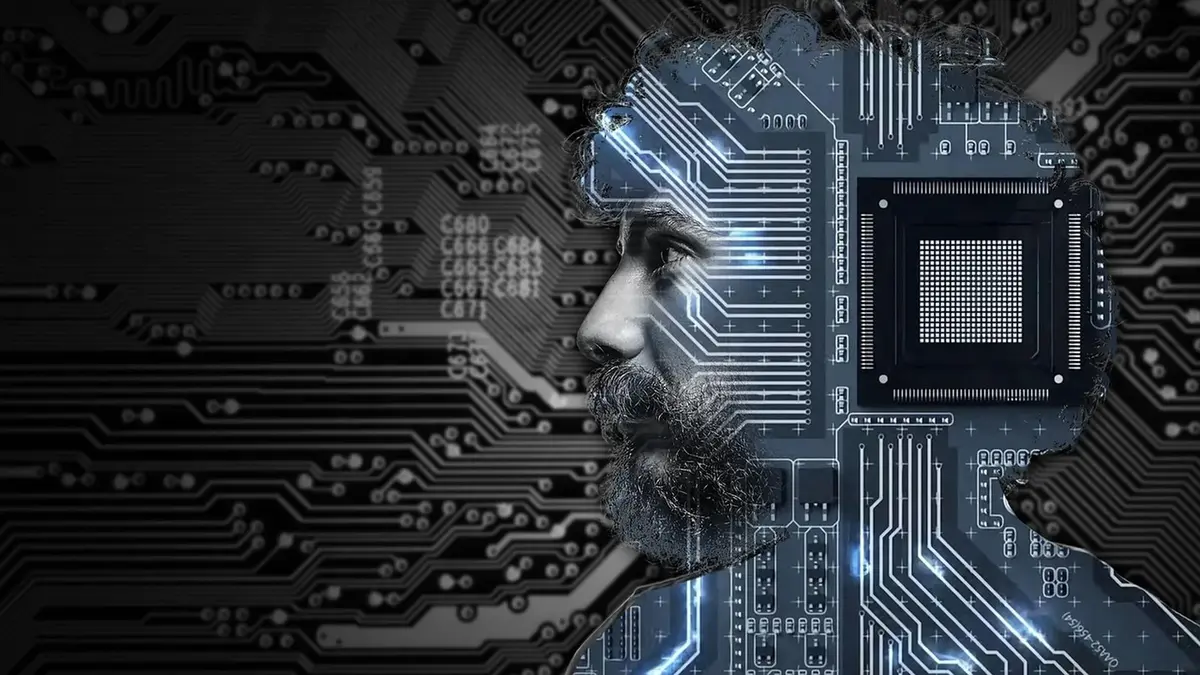
Nvidia's RTX Spark SoC promises on-device AI agents free from cloud fees and data exposure, but the always-on home AI supercomputer Huang envisions isn't here yet.
Jensen Huang unveiled the RTX Spark this week with a statement that felt more like a manifesto than a product pitch. The chip, a system-on-a-chip engineered to run AI agents locally on laptops and desktops, is Nvidia's clearest argument yet that the future of artificial intelligence is inside your home, not in a hyperscaler's datacenter.
"I could totally imagine that someday there's actually an AI supercomputer in your house," Huang told the audience at Sunday's rollout event. His analogy of choice: the home theater. You bought the screen, you own the experience, nobody charges you monthly to watch it.
The R2-D2 pitch
Huang's case for local AI rests on two pillars. Privacy comes first: an agent that reads your email or combs through bank statements on local hardware never hands that data to a remote server. Cost reduction follows, though the savings are relative. Subscription fatigue is real, and if cloud artificial intelligence services keep multiplying tiers and raising prices, the economics of a one-time hardware purchase sharpen over time.
The vision is coherent. Its most memorable framing, agents that become "a lot more like R2-D2 to you," lands because it implies a personal, persistent, and loyal assistant rather than a metered API call. Whether consumers will configure a dedicated AI box the way they once configured a router is the harder question.
The practical limits
The first RTX Spark devices will be laptops, which creates an immediate contradiction. Laptops sleep when their lids close. Continuous background agents require hardware that stays powered and responsive around the clock. PCWorld points out that always-on mini PCs are the more logical vehicle for Huang's home-supercomputer scenario, which means the compelling version of this product category is at least one hardware generation away.
Nvidia has also built a structural hedge into RTX Spark's architecture. Compute-heavy tasks can be routed to the cloud when the local chip runs out of headroom. That design detail is convenient for users but equally convenient for Nvidia, whose datacenter GPU business powers Google, Microsoft, and OpenAI. The company profits whether local or cloud wins, which tempers how seriously the market should read the home-AI rhetoric as a strategic commitment.
The subscription economics
Cloud providers are navigating their own pressures. According to Digital Watch Observatory, OpenAI launched ChatGPT Go at $8 a month in January, a lower-cost global tier aimed at expanding paid access while holding off advertising. The move signals that AI monetization models are still unsettled: the industry has not found a pricing floor that satisfies both user growth and investor return expectations.
That uncertainty is relevant to Nvidia's pitch. Every new subscription tier a cloud provider adds, or every price increase, shifts the cost-benefit calculation toward owning local hardware. The RTX Spark argument does not need to win on performance alone if the alternative keeps getting more expensive.
The policy backdrop
Marketplace reported this week that 33 U.S. states have passed more than 100 artificial intelligence laws in 2026 alone, even as the Trump administration rescinded a federal executive order that would have required pre-release review of new AI models. The regulatory landscape is fragmenting faster than any single compliance framework can track.
Local compute may benefit from this complexity. Data residency requirements and state-level privacy rules are structurally easier to satisfy when processing happens on hardware the user controls. Cloud providers face simultaneous multi-jurisdiction compliance; a home device does not.
What it means
The honest summary from PCWorld's breakdown is that Nvidia's vision is ahead of its product lineup. The silicon is real. The always-on mini PC ecosystem capable of running a fleet of personal agents is not yet shipping at scale, and the software layer that would make such agents genuinely useful is still catching up to the hardware ambitions.
Cloud incumbents have years of UX investment, trust, and seamless onboarding on their side. Closing that gap requires Nvidia's partners to ship compelling always-on form factors and developers to build agents worth running locally. Both are possible within two years; neither is guaranteed.
The real test arrives when independent benchmarks compare local inference latency and quality against cloud API responses on identical tasks. Until those numbers are public, the home AI supercomputer remains Jensen Huang's best theory.
FAQ
What is the Nvidia RTX Spark?
A system-on-a-chip designed to run AI models and agents directly on consumer hardware, such as laptops and mini PCs, without relying on a cloud connection for inference.
How does local AI compare to cloud AI on cost?
Local hardware has an upfront cost but avoids recurring subscription fees. The savings depend on how many cloud AI services a user currently pays for and how intensively they use them.
What is ChatGPT Go and how does it relate?
ChatGPT Go is OpenAI's $8-per-month global subscription tier launched in January 2026. It illustrates the ongoing pressure to find sustainable pricing for cloud AI, which indirectly strengthens the case for owning local compute.
Could AI regulation favor local over cloud AI?
Possibly. Fragmented state-level privacy and data residency laws are operationally simpler to satisfy with local hardware than with cloud services that must comply across multiple jurisdictions simultaneously.